


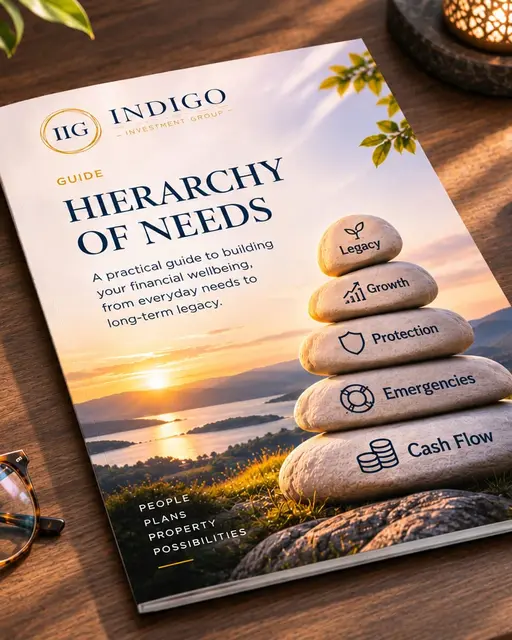
A Clearer Path to Financial Wellbeing
Financial wellbeing is not simply about having investments or accumulating wealth. It is about making sure the different parts of your finances work together, from managing everyday spending and protecting against unexpected events to building long-term financial security and eventually planning your legacy.
The pyramid presents this in five stages.
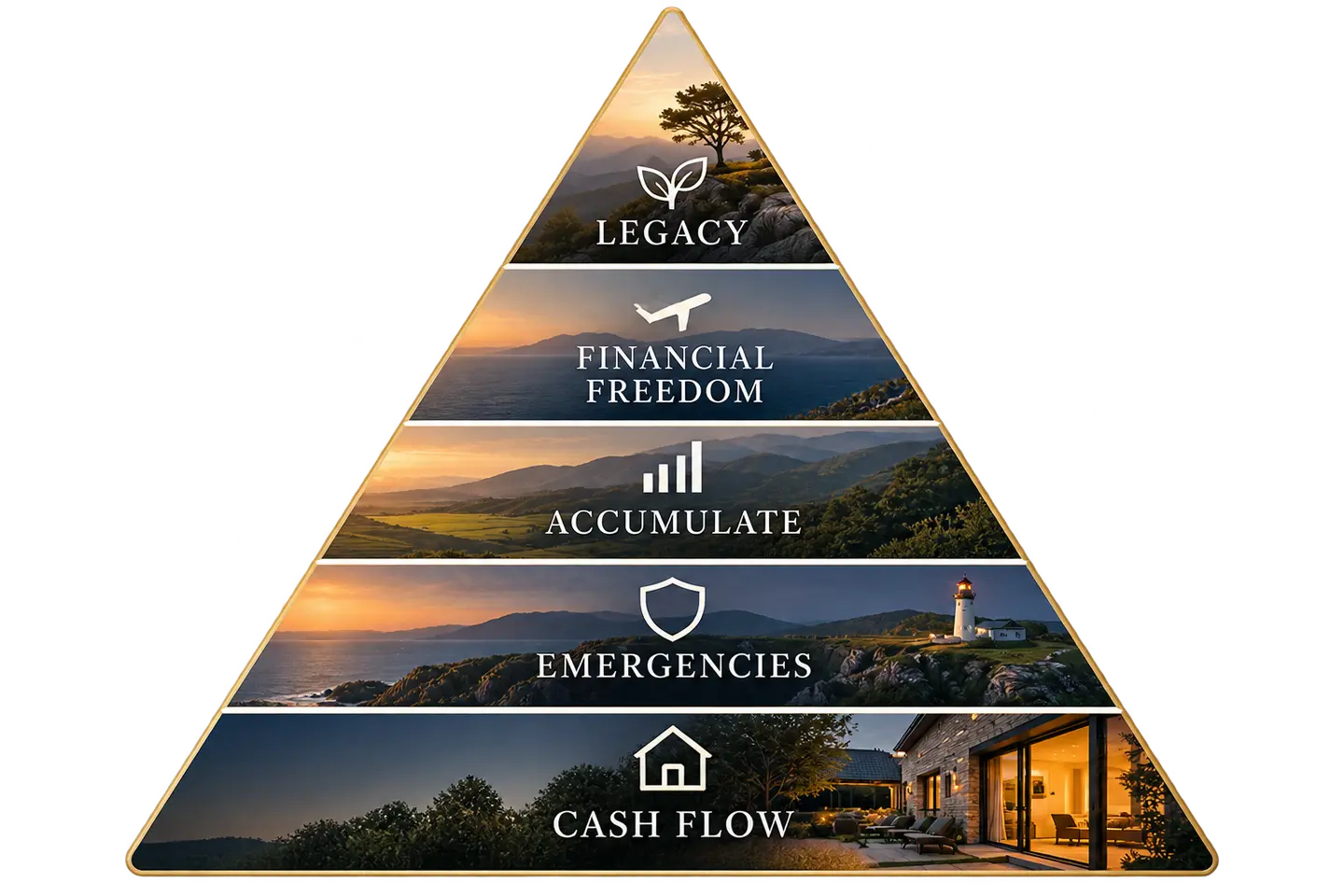
1. Cash Flow: Build the Foundation
Cash flow sits at the bottom because it supports everything above it.
This means understanding what is coming in, what is going out, and what is left over. Good cash-flow management helps you meet day-to-day expenses while creating capacity to save and plan for future goals.
The graphic highlights:
- Meeting day-to-day expenses
- Budgeting and planning
- Protecting your cash flow
In simple terms: before focusing on long-term wealth, you need control and visibility over your everyday finances.
2. Emergencies: Protect Against the Unexpected
Once day-to-day finances are under control, the next step is creating a financial safety net.
Unexpected costs or changes in circumstances can put pressure on even a well-structured financial plan. Building reserves and having appropriate protection can reduce the need to disrupt long-term savings or investments when something unexpected happens.
The graphic identifies:
- Building a cash reserve
- Managing risk and insurance
- Creating extra peace of mind
The objective: ensure a financial setback does not automatically become a long-term financial problem.
3. Accumulate: Build Your Wealth
With the foundations in place, attention can turn towards building and growing wealth over time.
This stage is about using surplus income effectively and making deliberate decisions about where money should go based on your priorities and future plans.
The graphic includes:
- Paying down debt
- Retirement planning
- Building non-pension investments
For example, someone may be balancing mortgage repayments, pension contributions and personal investments. The right balance will depend on individual goals, circumstances, time horizon and priorities.
The aim is not simply to accumulate more money. It is to build the financial resources needed to support the life you want in the future.
4. Financial Freedom: Turn Wealth into Choice
This is where financial planning becomes particularly meaningful.
Financial freedom does not necessarily mean becoming extraordinarily wealthy or stopping work completely. It means reaching a position where money gives you greater choice over how you live your life.
The graphic gives examples such as:
- Children's education
- Your retirement
- Lifestyle goals and future plans
For one person, financial freedom might mean retiring earlier. For another, it could mean working less, travelling more, helping children financially or simply knowing that work has become a choice rather than a necessity.
This stage shifts the conversation from “How much money do I have?” to “What can my money allow me to do?”
5. Legacy: Think Beyond Your Own Lifetime
At the top of the pyramid is legacy.
Once your own financial position and future needs are well provided for, financial planning can consider how wealth should eventually pass to the people or causes that matter to you.
The graphic highlights:
- Estate planning
- Inheritance planning
- Passing on your values
Importantly, legacy is not simply about transferring assets. It can also involve thinking carefully about who you want to benefit, when you want them to benefit and what you want your wealth to achieve.
How the Five Levels Work Together
The important point is that these areas should not be considered in isolation.
A person could have significant investments but inadequate emergency reserves. Someone could be contributing heavily towards retirement while struggling with monthly cash flow. Another person might have substantial wealth but no clear estate or inheritance plan.
The pyramid therefore encourages a more holistic approach:
Manage today → Protect against uncertainty → Build wealth → Create choice → Plan your legacy
That is really what the phrase “A Clearer Path to Financial Wellbeing” is communicating.